For those seeking to enhance their natural curls with added volume, length, or a touch of stylistic flair, the world of Curly Hair Extensions offers a diverse array of options. Understanding the different materials, attachment methods, and curl patterns available is crucial for making an informed decision that aligns with your hair type, lifestyle, and desired look. This comprehensive guide will classify and compare the popular types of hair extensions for curly hair, providing you with the knowledge to navigate the choices and select the perfect extensions for your needs.
Classifying by Material: Human Hair vs. Synthetic Hair
The fundamental distinction among curly hair extensions lies in the material they are made from: human hair or synthetic fibers. Each material offers unique advantages and disadvantages.
-
Human Hair Extensions: The Epitome of Naturality: Human hair extensions are crafted from real human hair, collected from donors. This material boasts the most natural look and feel, seamlessly blending with your own hair's texture and movement.
-
Advantages:
- Natural Appearance and Texture: Human hair extensions possess a natural sheen, movement, and texture that closely mimics real hair, making them virtually indistinguishable from your own curls.
- Styling Versatility: Just like your natural hair, human hair extensions can be styled with heat tools such as curling irons, straighteners, and blow dryers, allowing for a wide range of looks.
- Longevity: With proper care, high-quality human hair extensions can last significantly longer than synthetic options, making them a worthwhile investment.
- Color Customization: Human hair extensions can be dyed to perfectly match your natural hair color or to add highlights or lowlights, offering greater customization.
-
Disadvantages:
- Higher Cost: Human hair extensions typically come with a higher price tag compared to synthetic alternatives due to the sourcing and processing of real hair.
- Higher Maintenance: They require more care and maintenance, including regular washing, conditioning, and styling, similar to your natural hair.
- Reaction to Weather: Like natural hair, human hair extensions can be affected by humidity and may require restyling.
-
Synthetic Hair Extensions: An Affordable Alternative: Synthetic hair extensions are made from man-made fibers designed to resemble human hair. Technological advancements have led to significant improvements in the quality and natural appearance of synthetic extensions.
-
Advantages:
- Lower Cost: Synthetic extensions are generally more budget-friendly, making them an accessible option for many.
- Low Maintenance: They often require less maintenance than human hair extensions, typically holding their style even after washing.
- Variety of Styles and Colors: Synthetic extensions come in a wide array of pre-styled curl patterns and vibrant colors.
- Style Retention: They are often pre-set with a specific curl pattern that will bounce back after washing.
-
Disadvantages:
- Less Natural Look and Feel: While quality has improved, synthetic hair may still lack the natural movement and texture of human hair.
- Limited Styling Options: Most synthetic hair cannot be styled with heat tools as it can melt or become damaged.
- Shorter Lifespan: Synthetic extensions typically have a shorter lifespan compared to human hair extensions.
- Limited Color Customization: They cannot be easily dyed.

Classifying by Attachment Method: Securing Your Curls
The way curly hair extensions are attached to your natural hair is another crucial factor to consider, as it impacts the longevity, comfort, and potential impact on your hair.
-
Clip-In Extensions: Temporary Transformation at Your Fingertips: Clip-in extensions are wefts of hair with small clips attached to the base. They offer a temporary and versatile way to add volume and length.
- Advantages: Easy to apply and remove at home, no professional installation required, non-damaging when used correctly, can be used for temporary styling changes.
- Disadvantages: May not feel as secure as more permanent methods, can sometimes slip if not properly attached, not ideal for high-impact activities.
-
Tape-In Extensions: Semi-Permanent Seamless Integration: Tape-in extensions consist of hair wefts with adhesive tape at the base. They are applied by sandwiching sections of your natural hair between two tape-in wefts.
- Advantages: Relatively easy and quick professional installation, lay flat against the scalp for a seamless look, can last for several weeks with proper care.
- Disadvantages: Require professional removal, adhesive can sometimes cause buildup or tug on natural hair if not applied or removed correctly, require maintenance appointments for repositioning as hair grows.
-
Sew-In Extensions (Weaves): Secure and Long-Lasting: Sew-in extensions involve braiding your natural hair into cornrows and then sewing wefts of hair onto the braids using a needle and thread. 1
1. The Difference Between Clip-In and Sew-In Extensions - USA Hair
- Advantages: Very secure and long-lasting, can add significant volume and length, suitable for thick and resilient natural hair.
- Disadvantages: Requires professional installation and removal, can be time-consuming to install, may feel tight initially, requires careful washing and drying to prevent mildew, can put tension on the scalp if braids are too tight.
-
Micro Ring Extensions (Micro Loop/Bead): Strand-by-Strand Precision: Micro ring extensions involve attaching small bundles of extension hair to your natural hair using small metal rings or beads. A special tool is used to tighten the rings, securing the extensions.
- Advantages: No heat or glue involved, can look very natural as they are attached strand by strand, can be adjusted as hair grows.
- Disadvantages: Requires professional installation and removal, can be time-consuming to install, small rings can sometimes be visible if not properly concealed, may slip if not tightened correctly.
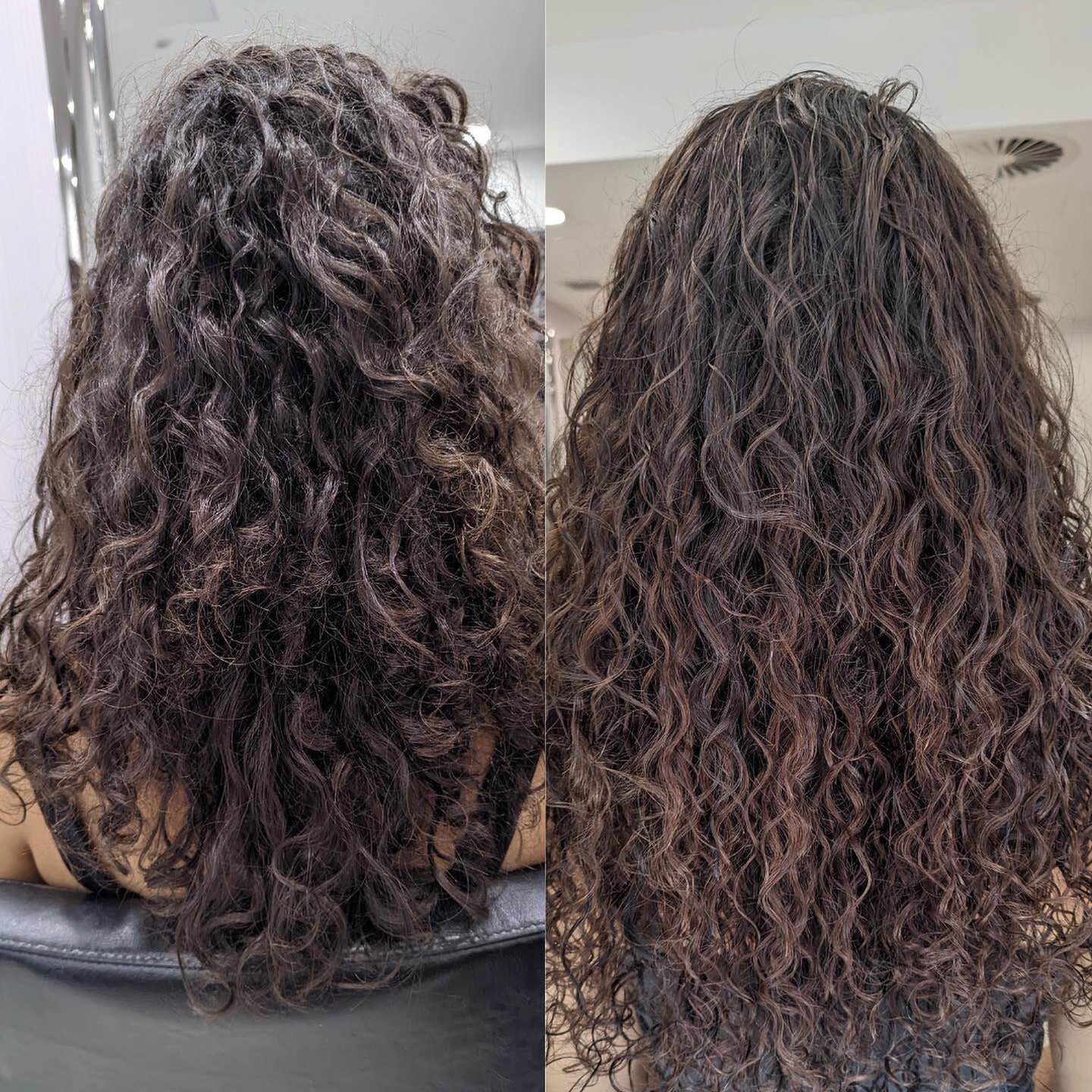
👉 Curly Hair Looks You’ll Love for Weddings & Special Events. See more here!
Classifying by Curl Pattern: Matching Your Unique Texture
Curly hair extensions come in a variety of curl patterns to match different natural curl types.
- Water Wave: Features loose, flowing waves with a soft, natural-looking bend. Ideal for those with wavy or loosely curled hair (Type 2 and looser Type 3).
- Loose Wave/Body Wave: Offers a more relaxed and voluminous wave pattern. Suitable for adding body and gentle waves to straight or slightly wavy hair, or blending with looser curls.
- Tight Curls: Mimics tighter spiral curls (Type 3b-3c), providing volume and definition for those with naturally curly hair.
- Afro Curls/Kinky Curls: Designed to blend with tightly coiled and kinky hair textures (Type 4), offering volume and length that matches natural Afro hair.
- Jerry Curl/Deep Wave: Features a defined, S-shaped curl pattern that is often more tightly packed than water wave. Can blend well with various curly hair types depending on the tightness.